One business graph.
Every application.
Customer data lives in the CRM. Purchase orders live in the ERP. Marketing performance lives in a dashboard. Margin lives in a spreadsheet. KPIs live in a board deck. None of these systems see each other.
GuardianVector is the infrastructure layer that connects them. A single, graph-native source of truth for your entire business, customers, products, orders, suppliers, campaigns, costs and revenue, purpose-built so your teams and your AI can reason across it all.
Most retail platforms model one slice of the business. The CRM knows the customer. The ERP knows the order. The BI tool knows the number. But nobody, and no system, sees the full picture. The customer who drove a referral that led to a wholesale account that changed the margin on a product line? That story crosses five systems. Today, a person has to piece it together manually. Tomorrow, an AI agent should be able to reason across it in seconds.
That only works if the underlying data is connected as a graph; people, products, places, orders, interactions, costs, and the relationships between them — not flattened into rows across disconnected tables.
The single source of truth where your AI can reason from a customer conversation all the way through to net profit.
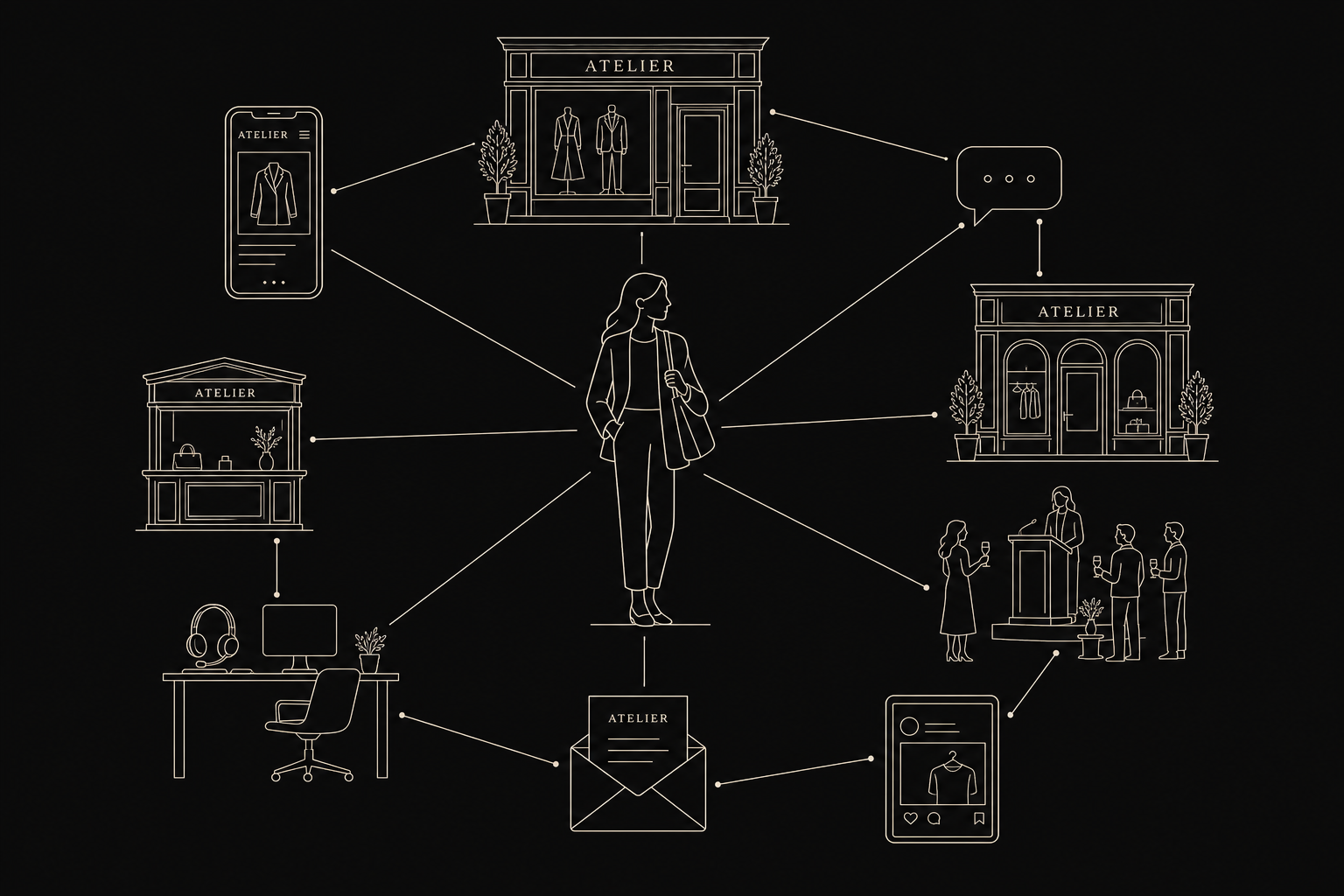
GuardianVector sits beneath your entire application layer. It ingests data from every source, point of sale, e-commerce, ERP, email, in-store interactions, marketing platforms, service history and financials, and unifies it into a single, graph-native model of your business. Your applications don't each maintain their own version of reality. They query one.
This means your loyalty programme knows what your buying team knows. Your marketing automation is grounded in actual margin data, not just engagement metrics. Your clientelling app sees the full relationship, not just the last transaction. Your AI agents can reason across the whole state of the business, from customer acquisition to marketing strategy to net profit — because everything is connected in one place.
Today, every capability runs on its own system with its own data model, its own integrations, and its own version of what's true. The result is fragmentation, and fragmentation is the thing that stops AI from reasoning about your business as a whole.
GuardianVector replaces that fragmentation with a single backbone. Build on it, connect to it, query it. Every application you run, current or future, draws from one place.